
Why Heel Pain Is the Most Common Type of Foot Pain Houston Clinics Treat

6 Reasons Unique Incision Surgery Houston Is Used for Foot Conditions [Infographic]
April 8, 2026
7 Signs You May Need Hammertoe Surgery Houston [Infographic]
April 10, 2026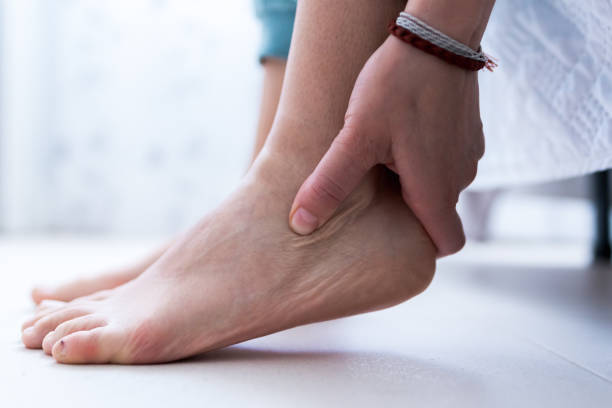
Heel pain affects working adults and active individuals across the city every day. As the leading cause of foot pain Houston patients seek care for, plantar fasciitis and heel spurs are frequently misidentified, and early mismanagement often delays meaningful relief for months.
Key Takeaways:
- Heel pain is the primary reason behind foot pain that Houston patients visit a podiatrist each year.
- Plantar fasciitis and heel spurs are distinct conditions requiring different treatment approaches.
- Early mismanagement of heel pain significantly extends the recovery period.
- A clinical diagnosis is the only reliable way to identify the true cause of heel discomfort.
- Matching treatment to the correct diagnosis leads to faster and longer-lasting relief.
Heel pain rarely announces itself gently. It builds over weeks, then hits hardest during the first steps of the morning or after long hours on the feet. For many people dealing with foot pain, Houston clinics treat foot pain regularly. This indicates that it’s a clear sign that something specific is going wrong beneath the surface.
What makes this condition so frustrating is how commonly it gets dismissed with remedies that never address the actual source. People try rest, store-bought insoles, and online stretches, only for the pain to return within days. Foot pain Houston specialists provide expert evaluation for patients dealing with persistent heel pain, offering targeted clinical solutions that actually work.
When the Ground Hurts Before the Day Starts
- The Morning Step Problem: That stabbing sensation during the first few steps after waking is one of the clearest signs of plantar fasciitis. The plantar fascia tightens during sleep, and sudden stretching upon standing creates sharp pain at the heel. This symptom affects a large share of working adults and is among the most frequently reported complaints in podiatric offices.
- Why the Pain Comes and Goes: The inconsistency of heel pain confuses most people. It often eases after a short walk but returns after sitting or sleeping. This pattern leads many to believe the condition is resolving on its own. It is not. The tissue simply warms up temporarily, and the underlying irritation continues to worsen with each week that passes without proper attention.
- How Heel Spurs Quietly Develop: Calcaneal enthesopathy describes inflammation and structural damage where the plantar fascia attaches to the heel bone. When this site endures repeated stress without recovery, the body deposits calcium there, forming a bony growth. This process develops gradually, which is why heel spurs often go undetected until pain becomes noticeably severe.
The Gap Between a Google Diagnosis and a Real One
- Why Self-Diagnosing Falls Short: Heel pain is not a single condition. It can stem from plantar fasciitis, bursitis, stress fractures, nerve entrapment, or Achilles tendinopathy, and each requires a different approach. Applying the right remedy for the wrong diagnosis wastes time and worsens the actual problem. A clinical evaluation is where effective and targeted care begins.
- What a Clinical Evaluation Covers: A proper podiatric assessment examines multiple layers of the problem to identify the root cause accurately:
- Foot arch type and how it affects load distribution during movement.
- Gait analysis to detect irregular patterns placing excess strain on the heel.
- Imaging such as X-rays or ultrasound to identify bone spurs or soft tissue damage.
- Medical history review to rule out systemic conditions like inflammatory arthritis.
- Footwear assessment to determine whether shoe selection is adding to the problem.
- Movement Patterns That Drive the Problem:Biomechanical loading plays a central role in how heel pain develops and how quickly it progresses. When the foot moves inefficiently through its gait cycle, certain structures absorb far more force than they are designed to handle. A specialist can assess these patterns and adapt treatment accordingly, which is why clinical evaluation changes outcomes for most patients.
What Shifts When Treatment Matches the Cause
- Targeted Care Produces Faster Results: When the root cause is correctly identified, treatment becomes precise rather than generalized. Plantar fasciitis may respond to custom orthotics and targeted stretching, while heel bursitis requires anti-inflammatory care and activity changes. Applying the wrong solution to the wrong condition keeps patients in pain far longer and can turn a manageable issue into a chronic one.
- Accurate Diagnosis Changes the Entire Outcome: Patients who receive a correct diagnosis early recover faster and face a lower chance of recurring episodes. The difference between a resolved case and a chronic condition often comes down to whether the right diagnosis was made from the start. Seeing a podiatrist at the first sign of persistent heel pain can change the entire recovery path.
Taking the Step Toward a Pain-Free Future
Heel pain does not have to become a lasting limitation. With a proper clinical assessment and a plan built around the actual cause, most patients see real improvement within a manageable timeframe. If heel discomfort has been affecting movement, work, or sleep, speaking with a licensed podiatrist is the most direct path to relief. Scheduling a consultation is where recovery truly begins.
Featured Image Source: https://media.gettyimages.com/id/2150782195/photo/womans-hands-caressing-the-discomfort-in-her-heel.jpg?s=612×612&w=0&k=20&c=joitz5U3mGLoVpSA8NLf9IJXzHP-2dnFz59W_-Mueso=