

HammerToe Treatment In Houston
The specialists at Nagler Foot Center, Houston use state-of-the-art technology & facilities to cure bunions, alleviate corns, and other foot deformities.
Do you know that corns, calluses, and pain may be an indication of joint problems?
Many foot disorders not only cause pain but can also affect the joint of the toes, preventing your foot from functioning properly. From infants born with deformities to elderly people and adults, any age group can acquire these deformities.
Tendon imbalance is the major reason behind toe deformities. If the natural function of the foot gets disrupted, tendons may stretch or tighten to compensate. This is the reason why people with flat feet, abnormally long toes or high arches have higher tendency of getting toe deformities.
Arthritis slowly destroys the joint surface and is one of the main reasons for discomfort or deformity. Wearing ill fitting footwear can also aggravate the toe deformity. Or if a fractured toe heals in a bad position, a problem can occur.
Common Deformities
Most common deformities are bone spurs, claw toes, hammertoes, curled toes, mallet toes, and underlapping toes. Some of these deformities might not be painful.
Corns and Calluses
A corn and callus is a buildup of the skin on the affected joint. These are the most noticeable and bothersome symptoms, often associated with bursitis. If left untreated, there is a chance of the toe’s mobility becoming limited. Serious problems can occur such as skin infections& ulceration which may require surgery.

Hammertoes
A hammertoe can be rigid or flexible. The tightened tendons & ligaments can cause joints to buckle, cocking the toe upwards. Wearing shoes can lead to bursitis or inflammation. The next would be formation of corns & calluses on the affected area.
Mallet and Claw Toes
Mallet and claw toes look similar to hammertoes but are present at different locations on the affected area of the toe. Claw toe is present at the abnormal positions on the three joints of the toe, whereas, in mallet toe, the joint at the end of toe buckles.
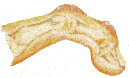
Claw Toe
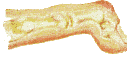
Mallet Toe
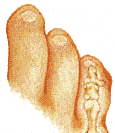
Bone Spur
An overgrowth of the bone occurring alone or along with hammertoe is called bone spur. Corn, calluses, and pain are the symptoms of the problem. If left untreated, a bone spur will result in bursitis and small skin ulceration.
Overlapping and Underlapping Toes
If a toe overlaps or underlaps, pushing the adjacent toe, it will cause irritation. Bunions can also be the reason behind the second top overlapping in adults.
Hammer Toes Videos
After Surgery Care
When you undergo a surgery at Nagler Foot Center, there could be some swelling, limited mobility, and stiffness for as long as eight to twelve weeks. Our experts suggest patients to keep the foot elevated above heart level and apply ice packs to reduce swelling. Although, many people are able to walk immediately post-surgery, we recommend that such activities should be restricted for at least 24 hours.